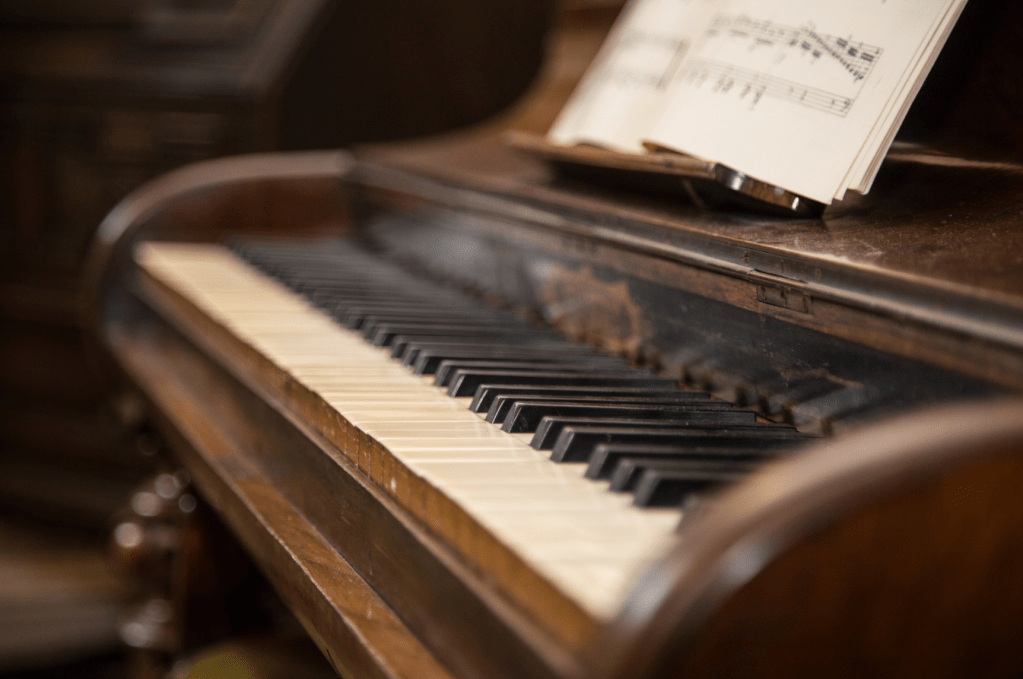
I learned how to play the piano in highschool. Being in the highschool marching band, I was around many people who grew up musically and that was not me. I was the only one in my family who played an instrument for an extended duration of time. I remember distinctly coming home one day after my part time job and going, “Mom I want to buy a keyboard.” We got this dinky little keyboard and I started to learn.
Now how did I go about learning? I actually used a book: Alfreds Basic Adult Piano Course. Would I recommend learning from a book? Sure in some ways. What helped for me was my underlying knowledge of music theory, so without that basic knowledge, motivation to follow a book may be difficult. Below are five methods I recommend if you’re looking to get into piano
1. Take Advantage of YouTube and The Internet
What’s so great about the 2010’s and now into the 2020’s is the abundance of information and tutorials on the internet. Rather than books using a 2-D image to try and explain hand position, videos allow a used to actually see how its done. A picture may be worth a 1000 words, but a video is 120+ pictures a second. Take that books.
Some great videos to get you started on your piano learning journey:
Pianote’s 7-day introduction to Piano. I adore this video. This video takes you through the basics of learning the piano. She teaches you how to become familiar with the piano, all of the note names, how to create chords, and then ends in playing a song. Whenever someone asks me where to start when they want to learn piano, this is where I send them.
MangoldProject’s video on simple chords. What Mangold does is show you how to make simple chord shapes such as Dmajor and Gminor. All music is created of chords, so this will give you an intro to how to form them
2. Create A Baby-Step Plan
What I’ve learned throughout my venture of learning both music and skills, is that if you try to do too much at once, you wont accomplish what you set out to do. Creation of a daily plan has always worked to my advantage because it allows you to track your progress, and have small little accomplishments along the way to keep you motivated. An example of this can be as follows
- Day 1: Learn the Notes of the Keyboard
- Day 2: Play the Five-Finger Scale with both left and right hand individually at 100 bpm
- Day 3: Play the Five-Finger Scale with both hands simultaneously at 100 bpm
- Day 4: Play Fifths for C, G, and A – Be able to rotate between at 80 bpm
- Day 5: Play C, G, and Am Triads – Be able to rotate between at 80bpm
- Day 6: Play Imagine by John Lennon
Now if you look at the example above, the exercises are broken down into both the exercise and the tempo. This gives you a numeric milestone to hit.
3. Use a Metronome
Any musician can’t emphasize this enough. Download a metronome app and play along to the clicking of the beat. There are many good free ones available on the App Store. I use Pro Metronome. Go download one and never look back!
4. Play Music
I honestly can’t emphasize this one enough. Play. Music. For countless amounts of times throughout my learning, be it in classical concert rehearsals or private lessons when I was a concert musician, I was routinely practicing exercises. Now don’t get me wrong, there’s always a time and place for exercises, but in order to build a love for the instrument and keep yourself motivated, you need to play music. Learn solo’s or your favorite songs. Learn pop music if you’d like. Whatever your interests are, pick a piece of music and learn it. You’ll learn style of how the composer wrote, and then that gets added to your arsenal. My first piece that I learned was ‘River Flows in You’ by Yiruma.
Hope you all enjoy. If you have any questions, please don’t hesitate to contact me!
-Jon
 A Day In The Life
Leave a comment